
Hello! Who are you, and where are you from? What’s your venture?
We invested $30K and converted our garage into a studio apartment – that same apartment soon began to generate $1400 a month.
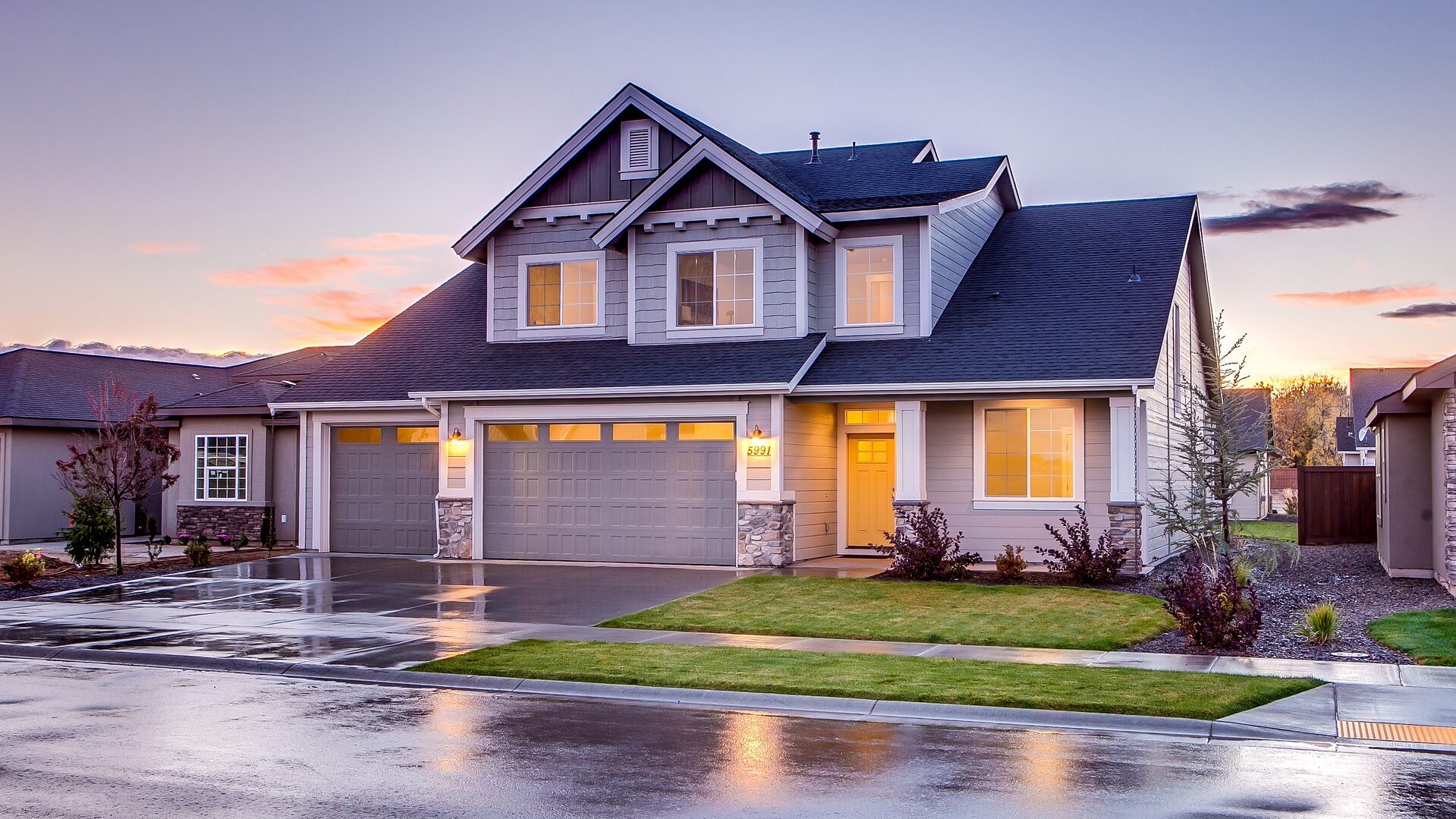
Two years later, we contacted the bank to do a cash-out refinance, and withdrew $100K since the housing market’s appreciation gave us some more financial flexibility. Our previous strategy had paid off, so we decided to try again and reinvested the $100K into building an accessory dwelling unit (ADU) in the backyard – this was a two-bedroom, 2-bathroom unit that now brings in approximately $3K monthly on Airbnb. We successfully converted a single-family house into a three-unit property: The house itself, the studio apartment, and the ADU.
Motivated by our previous achievements, we purchased a side by side duplex later in 2019, with the goal of also house-hacking this building. While working on turning the duplex into another real estate success story, we noticed that there is a significant profit difference in income between renting properties, and listing them on Airbnb. We therefore listed our original property (the three-unit property) on Airbnb, and it started generating nearly three-times as much money as before. After seeing the difference between renting to tenants vs. Airbnb, we knew the future direction for the new duplex: Airbnb.
We began living in the duplex, while also using Airbnb to keep the other unit occupied. Then we decided to do another cash-out refinance on both the original three-unit property and our duplex. This time, we were able to withdraw $250K, which we then utilized to purchase another single family home. Convert it into a duplex by making the entire second-story into a one-bedroom apartment. We now live on the lower level of this building and primarily market the upper level towards travel-nurses on Airbnb.
We then purchased another property with the remainder of the refinanced money we had left. This one is not a house-hack though, as the two houses on the property are completely separate. Both of these houses have three bedrooms and two bathrooms, providing ample space.
After listing the last two houses on Airbnb, we were generating approximately $20K a month from our collective real estate efforts, in addition to our regular W2 jobs.
What’s your backstory? How did you find your deal?
My wife and I purchased the four-bedroom house in 2017 with an initial investment of $180K. With three bedrooms to spare, we saw an immediate real estate opportunity to generate extra revenue. We started by renting three of the four bedrooms for $700 each, and with the extra $2100 every month, we were able to start rapidly paying down the mortgage.
Our financial situation was improving very rapidly. Including the converted garage apartment, we were now making an extra $3500, monthly, from simply renting out some unused space.
As a bare minimum starting point, we would look for a property that has at least 2,500 square-foot of space. Once that criteria is met, any of the following features make the property a great start-point: a basement that can be remodeled and has potential for its own entrance, a two-story house with the potential for an external staircase on the second-floor, a two-car garage that can be converted into another housing unit, or a property that has enough real estate for an accessory dwelling unit. When a property has more than one of these features, it becomes an excellent candidate.
How did you finance it? Did you get a loan from the bank? Interest and terms?
We were able to secure a loan by putting down 5% of the total amount on the first property. However, it is also entirely possible to secure a FHA loan by putting 3.5% with the limit being a four-unit property if we wanted to. Nevertheless this gave us plenty of flexibility to get started, and a relatively low cost to the barrier to entry. Afterwards we would continue to refinance our properties, use those funds to upgrade our properties or purchase another property and repeat the process over again.
For the ADU (accessory dwelling unit), it was primarily funded with the $150K cash out refinance we did on our first property. We also used various 0% APR credit cards to fund some of the renovations – with 0% interest and we were able to pay the credit cards down with the property’s profit without accumulating any interest.
Was there any repairs? How long did it take?
This is a small thing, but it is definitely worth it to research methods for noise insulation between walls – our approach was to use mass-loaded vinyl on the shared wall, and then add an additional layer of drywall to dampen the noise. We’ve implemented this setup on any applicable properties, and it has worked perfectly.
Also using a dividing wall to create multiple units is a great idea. I researched our county and see what criteria were needed for an accessory dwelling unit. My local area defines a multi-family unit as a building with a stove in it. So if we were to use an induction cooktop, we could negate the technicality of needing to rezone the building for a multi-family unit.
For the sake of time and simplicity, we hired contractors, and, only did the permitting ourselves in order to save time and ensure everything was done properly. We were able to scale our business in five years or so, and part of the reason for that is that we did not have to waste our own time to physically complete the projects – this would have greatly affected our progress.
How did you find your buyer/tenant? Do you have a team?
We marketed it towards travel nurses. We use Airbnb, Vrbo, or word of mouth referrals, and we typically book an average of 20 nights a month. We list our Airbnb property with a minimum stay of 30 days. Nurses are often the only groups of people that stay for that long and meet this requirement. And sometimes when we are at real estate meetups, we simply people let them know that we have a property available and if they know someone in the healthcare industry that wants to rent.
What is the revenue? What are the expenses?
We are currently cash flowing $20K a month. In terms of revenue, that number is closer to $35K monthly. It’s not too late to get into the Airbnb market. We have nine properties listed on Airbnb, and these have yielded great returns. Properties will appreciate over time, but also generate actual cash flow on a monthly-basis.
The main expenses are the Airbnb cleaning costs, but it’s a definite needed expense that shouldn’t be taken for granted. Without the presence of cleaning companies, managing various rental properties would be very difficult. We would have to allocate most of our time towards cleaning the properties ourselves.
How are you doing today and what does the future look like?
We love hosting on Airbnb and will continue using it. Everyone should try out Airbnb at least once. There are negative connotations around being an Airbnb hosts, like will this have a negative impact on renters market. But there are two sides to that story, as renting Airbnbs also provides opportunities for visitors. The lines are often skewed, however, if Airbnb didn’t exist, there would be no place for people like travel nurses to affordably rent and stay.
With the 4th-fastest growing population, an immense amount of diversity, and the upgrades to the transportation infrastructure, we believe Atlanta will have a very desirable housing-market and we plan to keep investing in it.
Any advice for other who want to get started?
Real estate is really just a shortcut. It allows you to leverage your borrowed funds and use your money efficiently. While a property, in some cases, may not generate monthly cash flow, you also have to think about the fact that the property is appreciating over time, and being paid off by the renters.
Even when the housing market is relatively high, turning a single property into a multi-family rental property can still be lucrative. For example, it’s very unlikely that the mortgage for the average house will cost more than what our three-unit property is generating in revenue.
If there are no multi-family rental properties in my local area, I highly recommend making your own. As you’ve read in my story, the first unit was a single-family housing unit, and we managed to successfully convert that into a money-generating three-unit property. The conversion on my latest home was $20K, but the second story apartment is generating $2,500 a month and that property will pay itself off within the first year.
Operating a two-unit property might seems more regulated than a three-unit property, but every property has different rules and regulations when it comes to the zoning designation. Depending on the region, I would recommend looking at the rules for each property type before coming to a final decision.
It is not illegal to convert a single-family home into a multifamily home. If you were to convert your properties without looking into the local zoning ordinances, then you may accidentally break the law. However, once you have checked with your city/county ordinances to ensure your real estate plans do not break any rules then everything should be good to go. In general, we’ve found that there is not generally much of an issue with these conversions, as long as your conversion does not raise a flag with the community, the zoning board is fairly lenient.